
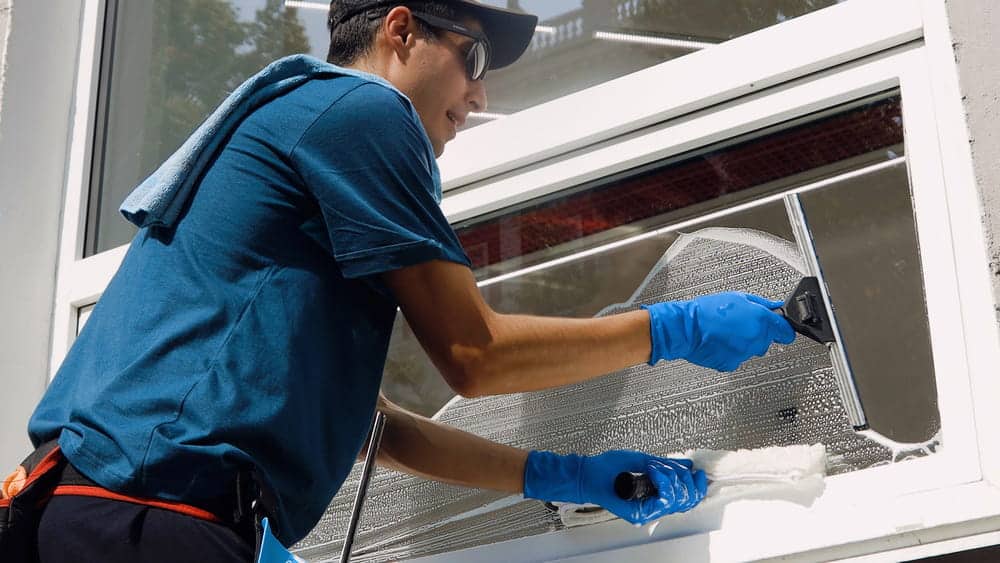
It Seems Simple—Until You Try to Get It Truly Clear
Most people don’t overthink window cleaning.
You spray something on the glass, wipe it down, and maybe go over it again if you see streaks. Step back, and it looks better than before. Good enough.
But then you catch it later in the day. The light shifts, and suddenly there’s a haze you didn’t notice before. Or faint streaks that weren’t visible from the angle you were standing at.
That’s usually the moment where it clicks—cleaning windows isn’t quite as straightforward as it looks.
In This Area, Windows Pick Up More Than You Expect
Around Westlake and the greater Cleveland area, the environment does more work on your windows than you might think.
There’s moisture coming off the lake, seasonal pollen, wind carrying fine debris, and rain that leaves behind minerals once it dries. None of it looks dramatic on its own, but over time it builds into a thin layer across the glass.
The tricky part is that this layer doesn’t always show up right away. It reveals itself depending on the light, certain times of day, certain angles.
So even when windows have been cleaned recently, they can still look slightly off.
The Difference Usually Comes Down to What Gets Left Behind
A lot of window cleaning removes the visible dirt.
What separates professional results is what doesn’t get left behind after that.
Because once the obvious debris is gone, what’s left is often a mix of residue—either from the water itself or from whatever was used to clean the glass.
That residue is what creates streaking. It’s what causes that faint haze that shows up later. And it’s what makes windows look clean in one moment and slightly dull in the next.
Removing dirt is one part of the job. Leaving nothing behind is the part that’s harder to get right.
Water Quality Changes the Outcome More Than People Realize
This is one of those details that doesn’t get much attention until you see it side by side.
Standard tap water contains minerals. When it dries, those minerals stay on the glass. That’s what creates spotting, even when everything looked clean during the process.
Professional window cleaning approaches things differently.
By using purified water—water that’s been stripped of those minerals—the rinse doesn’t leave anything behind when it dries. There’s no spotting, no residue, no need to go back over it again.
It’s a small shift in process, but it changes how the final result holds up.
Cleaning Solutions Matter, But Not in the Way People Think
There’s a tendency to focus on what product is being used.
But the goal isn’t just to cut through dirt—it’s to do it without interfering with the finish.
Some cleaning solutions do a good job removing grime, but they leave behind a film that’s hard to see until the glass dries completely. Others break things down more cleanly, so there’s nothing left to cause streaking later.
That’s why eco-friendly approaches tend to work well here. Not because they’re gentler—but because they’re designed to leave less behind.
And in a place where moisture and light can highlight every detail, that makes a difference.
Height and Access Change How Consistent the Results Are
Cleaning a window at eye level gives you control.
You can see what you’re doing, adjust your angle, go back over areas that don’t look right.
Once you move to upper-level windows, that control starts to fade. You’re working at a distance, often at an angle, and the process becomes less precise.
That’s where inconsistency creeps in.
Professional setups are built to maintain that same level of control, regardless of height. Not by making the job more complicated—but by removing the variables that cause uneven results.
From the outside, it might not look much different. But the finish tends to tell the story.
The Goal Isn’t Just Clean Windows—It’s Consistent Clarity
Most homeowners aren’t aiming for perfection.
They just want their windows to look clear in a way that feels finished. Not better than before—just right.
That consistency is what defines professional window cleaning.
It’s not about one window looking great. It’s about every window looking the same. No patches, no streaks catching light at certain angles, no subtle differences from one section of the house to another.
When that’s done well, it doesn’t stand out. It just looks natural.
Why It Feels Different Once You’ve Seen It Done Right
There’s usually a shift after homeowners experience professional results for the first time.
Not because the difference is dramatic—but because it’s consistent.
The windows look the same in the morning as they do in the afternoon. The clarity holds up. There’s nothing pulling your attention toward imperfections.
And once you’ve seen that, it becomes harder to go back to results that feel slightly uneven.
Where Paneless Window Cleaning Fits Into That
Paneless Window Cleaning focuses on getting those details right without overcomplicating the process.
Working with the conditions in Westlake and the Cleveland area instead of against them. Using methods that don’t leave residue behind. Keeping the results consistent across every window, not just the easy ones.
It’s a straightforward service—but the outcome is what sets it apart.
If your windows look clean at first glance but never quite feel clear, there’s usually something being left behind.
Get a free quote and see what a true, consistent clean actually looks like:
https://panelessexperience.com/residential-window-cleaning/
FAQs
What makes professional window cleaning different from DIY?
The biggest difference is removing residue completely so the glass dries clear without streaks.
Why do my windows still look cloudy after cleaning them?
Usually because of minerals in the water or leftover cleaning solution.
Does professional window cleaning last longer?
It often does, since there’s less residue for new dirt to stick to.
Is it worth hiring someone for basic window cleaning?
For many homeowners, it comes down to time, consistency, and better results.